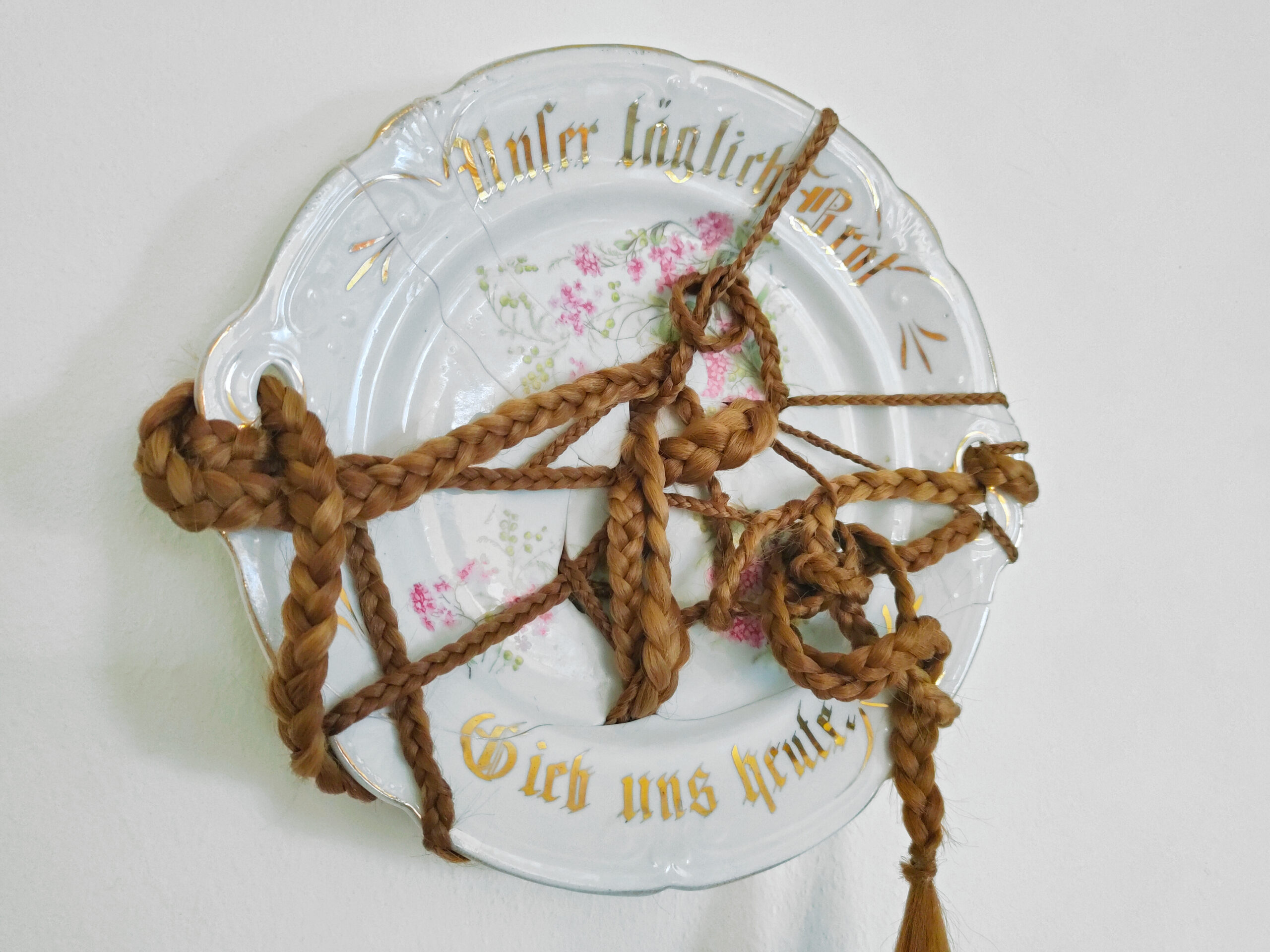
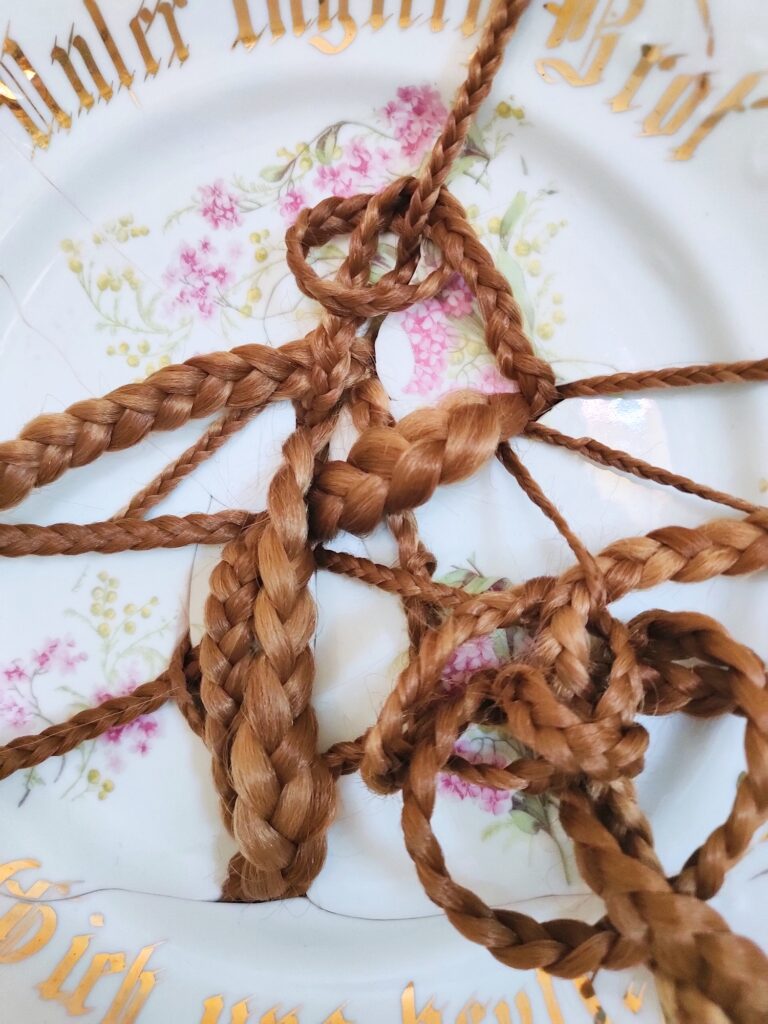
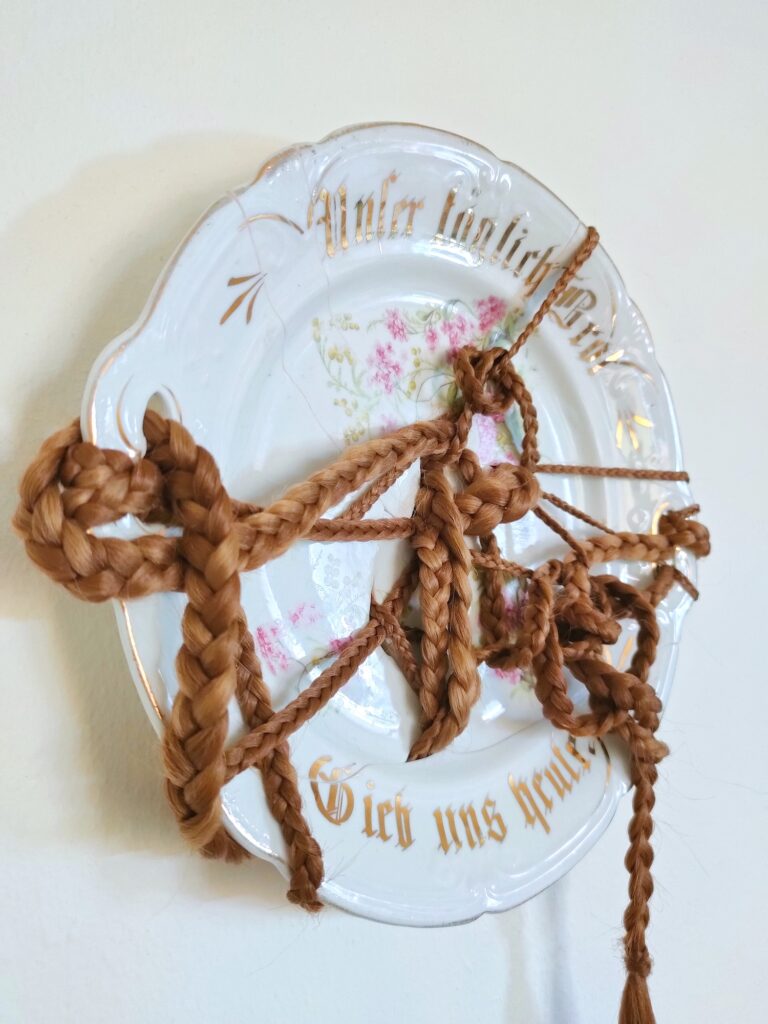
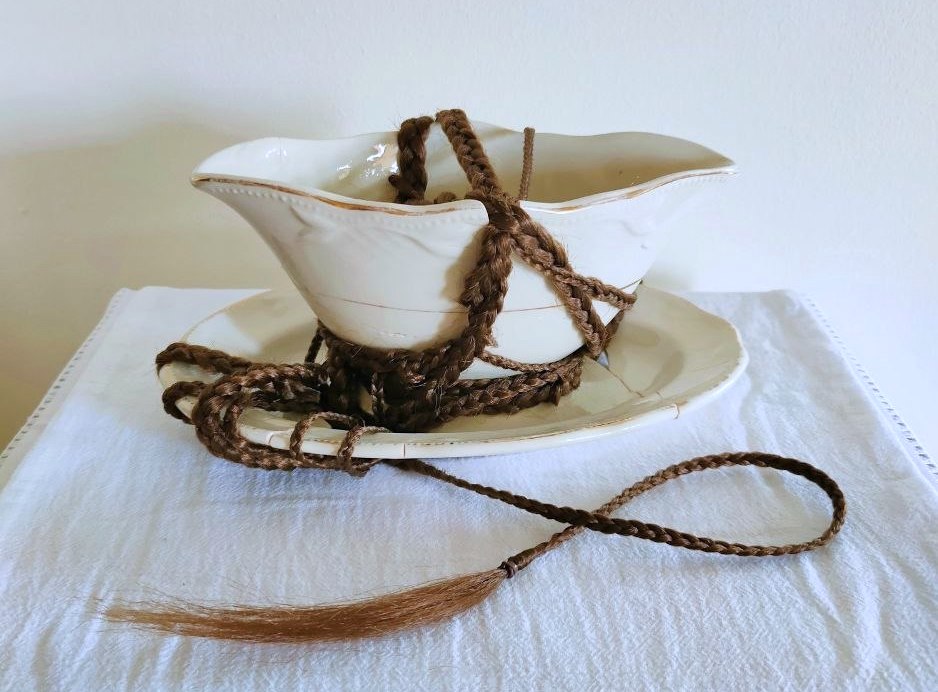
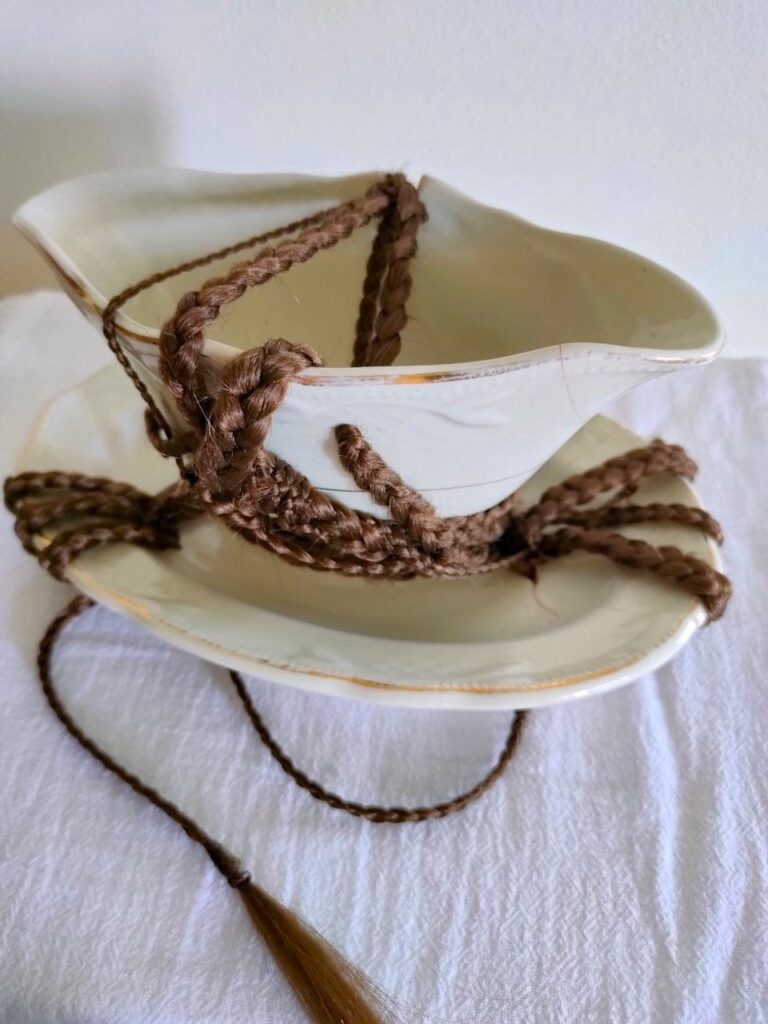
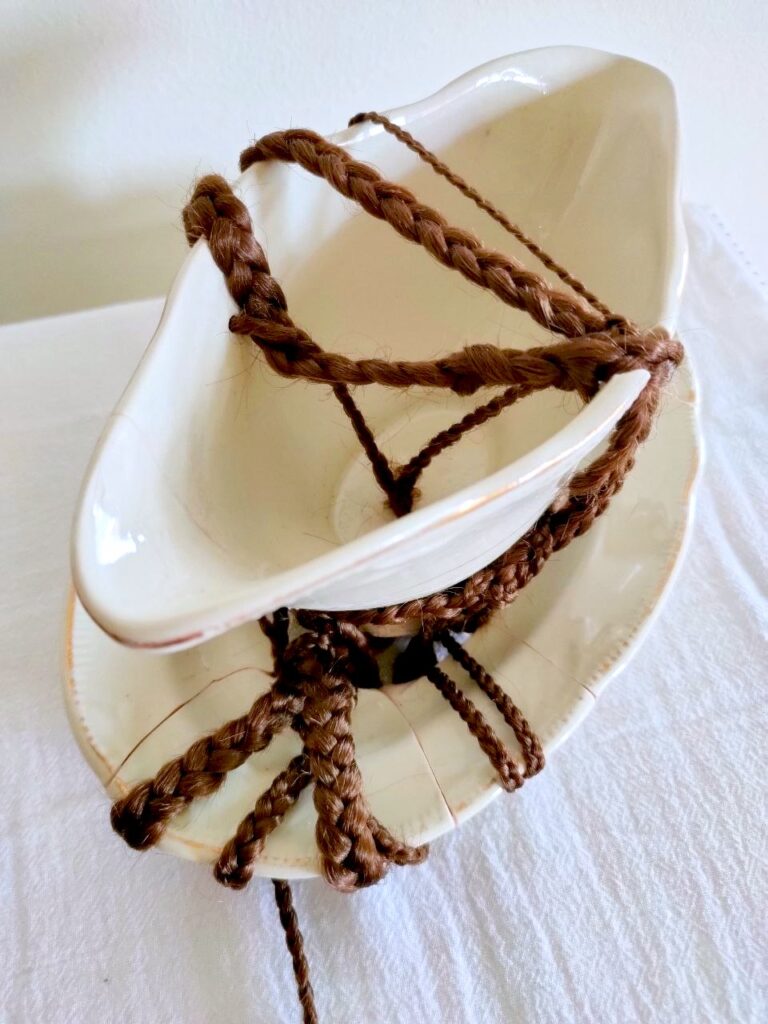
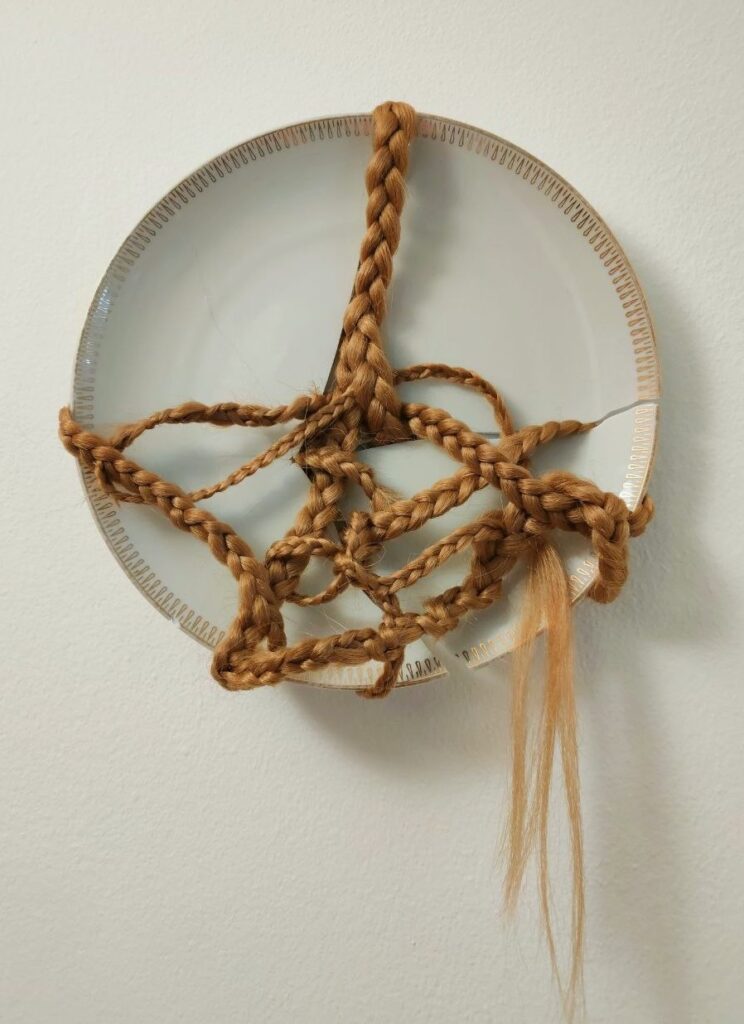
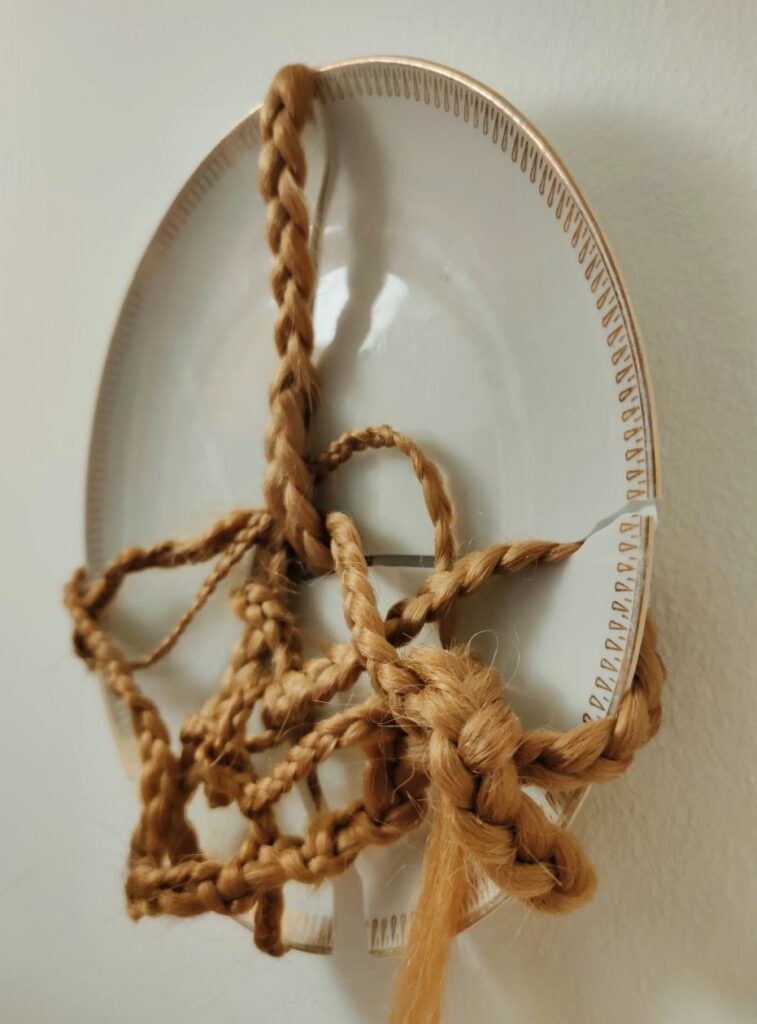
Hair on the teeth, 2026
art objects (porcelain, synthetic hair)
“Dead porcelain” stood untouched behind glass – in Soviet households imported tableware from the GDR became a part of the cult of the sacred cabinet. It was a testimony demonstrating access, connection, a fragile claim to dignity within a system of shortage. The cabinet became an iconostasis of illusory well-being, a repository of an unattainable dream. To use this porcelain for food was to risk breaking not only the object but the family’s carefully assembled image. These once hard-to-find relics now circulate in flea markets and online platforms, cheaply and anonymously, disconnected from the stories and women whose status was measured by them.
The braid was never neutral, it was always a social instrument, a technology of containment: tightly bound hair signaled order, propriety, a woman correctly held within the structure of family and community; loose hair marked transgression, a body outside of control. Here, that same discipline is turned against itself – the braiding is not used to bind into order, but to break the system, illusion, and inaccessibility inherent in the object. The title refers to the German idiom “Haare auf den Zähnen haben” / “to have hair on one’s teeth,” used to describe a woman who is sharp-tongued, unyielding, ready for confrontation. In this disagreement and refusal, strands of hair penetrate the untouchable porcelain, breaking it into fragments and simultaneously holding them together with their soft, plastic structure.