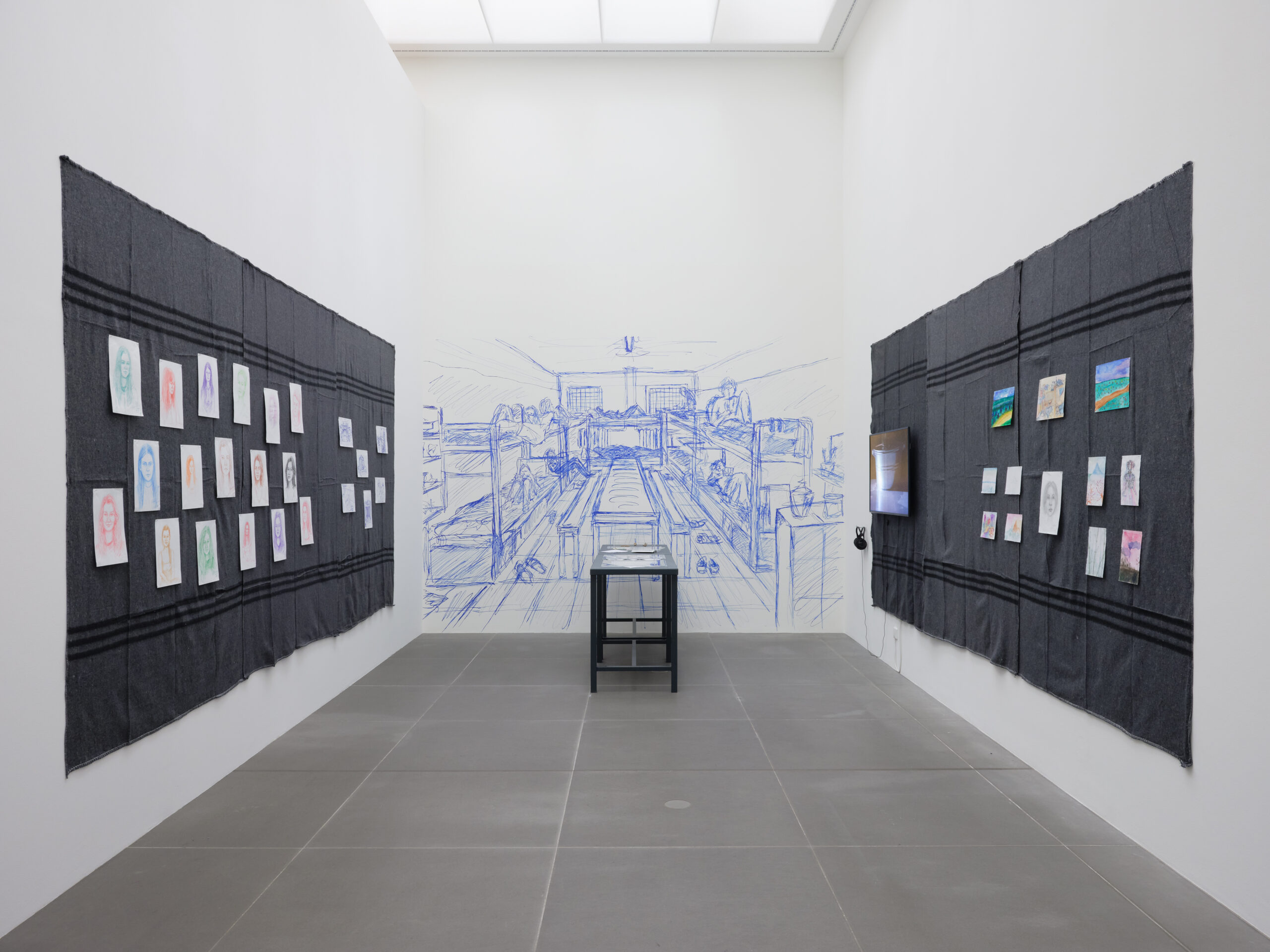
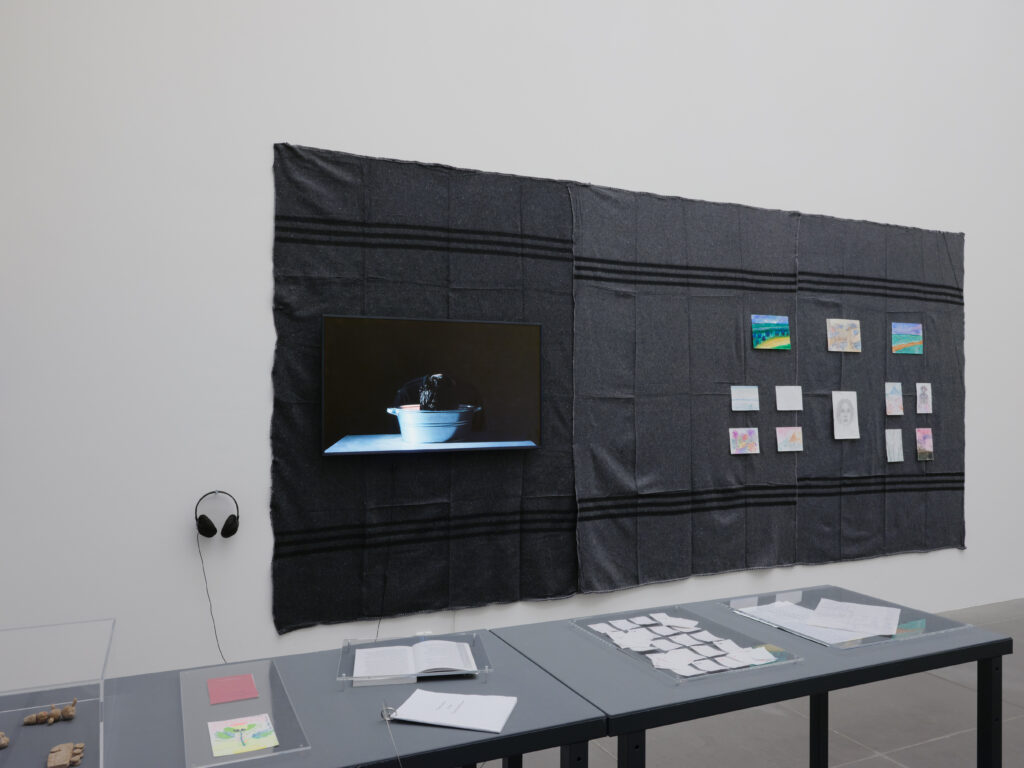
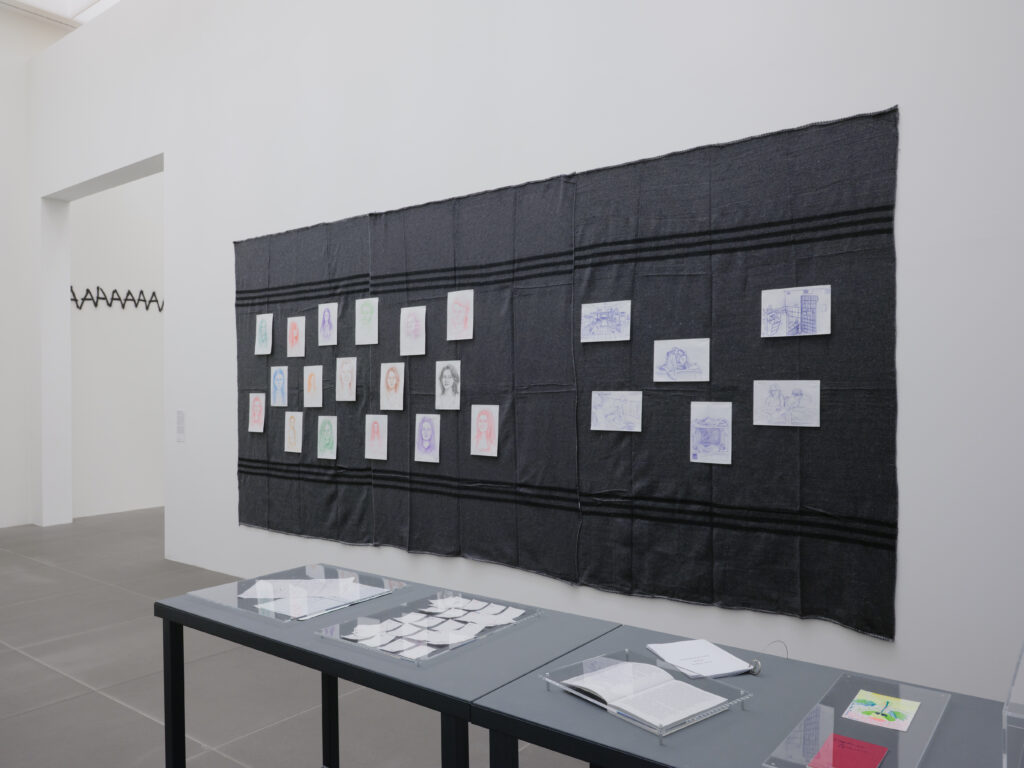
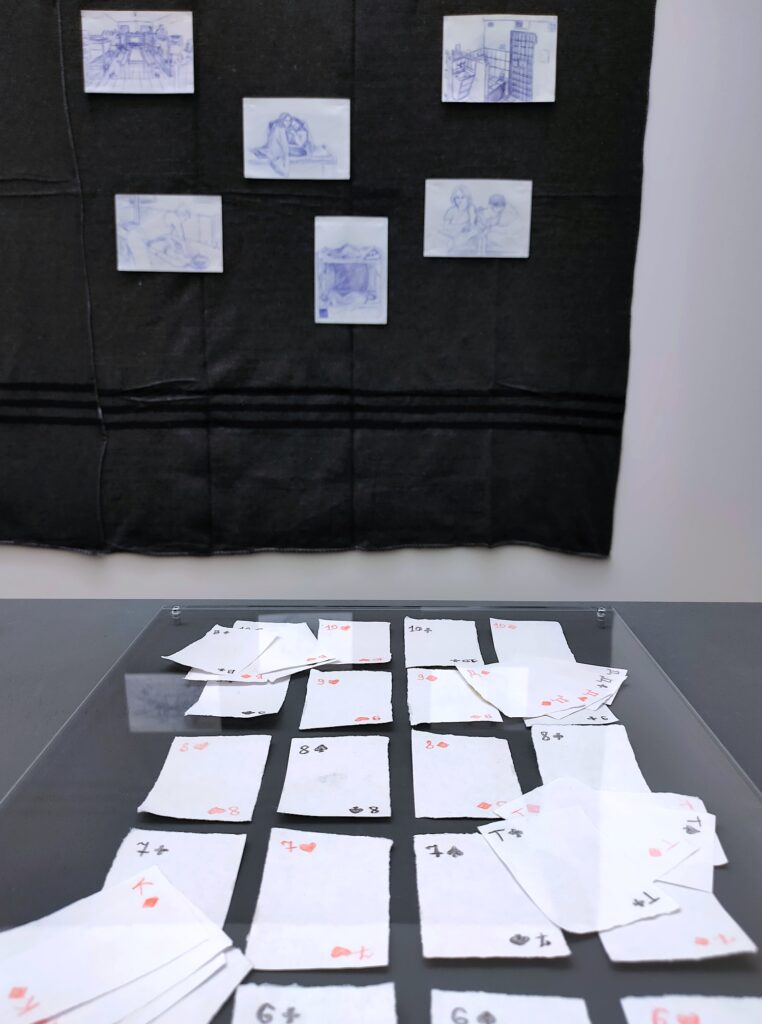
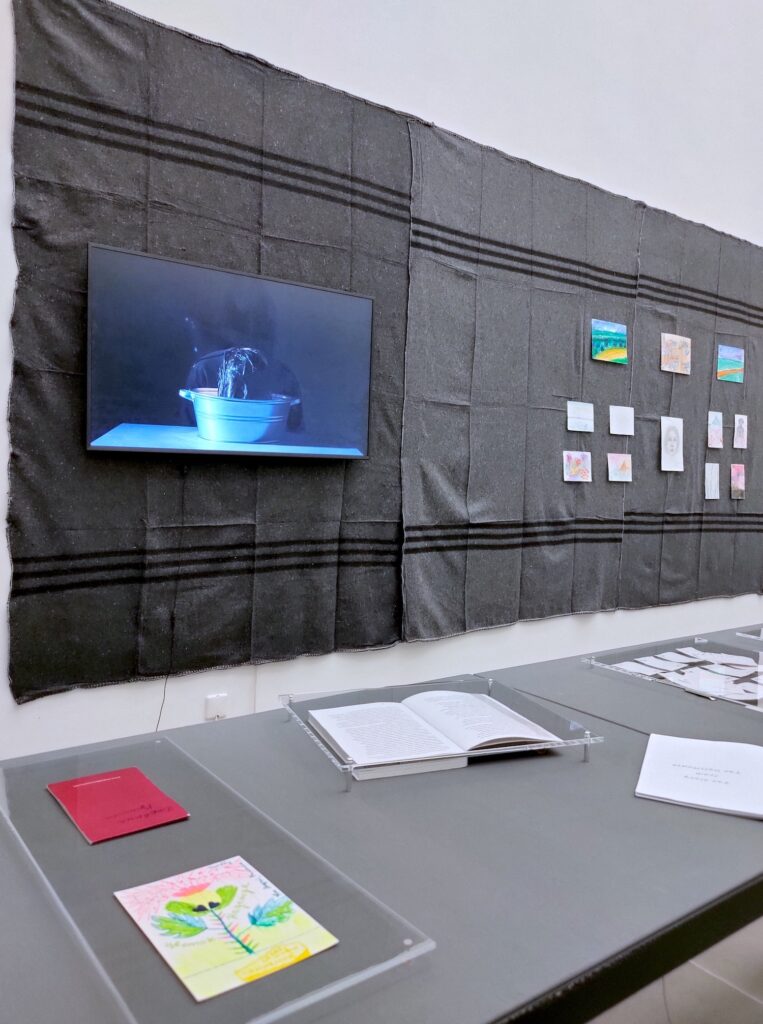
A series of pen sketches illustrates attempts to organize leisure time in the cell. Another series features coloured pencil portraits of women, many of whom are drawn with flowing hair. Washing hair itself was an act of solidarity and resistance: with no access to showers, prisoners filled plastic bottles with cold water from the sink, warmed them against their bodies at night, and help each other’s with washing. The video performance We Washed Each Other’s Hair recreates this ritual, filmed later in Kyiv with the participation of Belarusian and Ukrainian women.
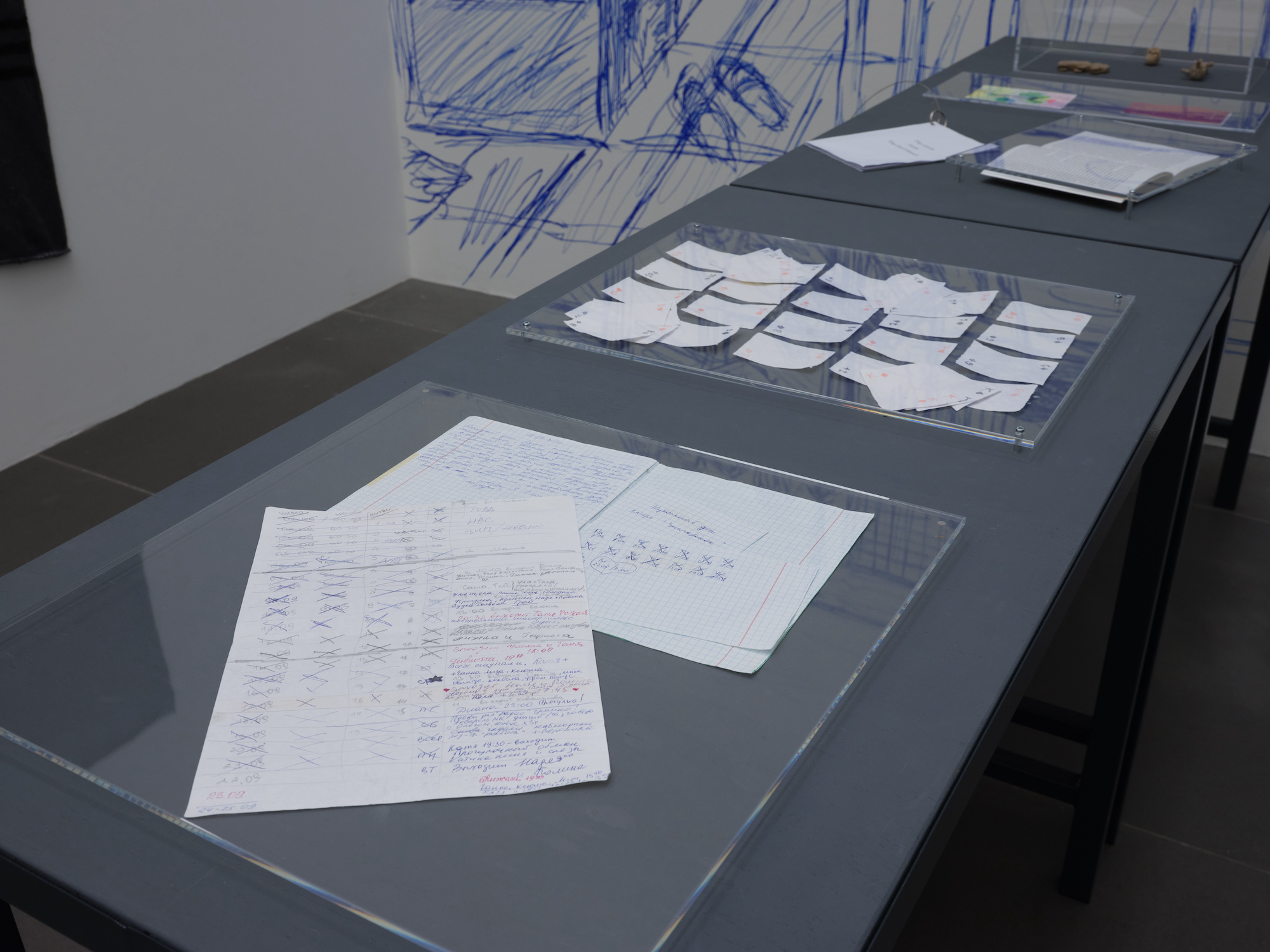
The installation also includes drawings made by women, and treasured artefacts: figurines from bread, playing cards drawn on paper, a collective calendar, a book with hidden messages, and more. Each object embodies a gesture of violation of prison regime, and thus an act of resistance. The artist’s own diary is displayed open at its final page with written future title — Dollhouse.
We washed each other’s hair and braided them.
We shared our personal stories and played fortune-telling.
We gave each other massages, impromptu beauty treatments and drew ballpoint pen tattoos.
We played simple games and made our own games out of paper.
We drew, sculpted and painted.
We kept diaries and sang songs.
We argued or flirted with the guards as if they were boys from another group or counsellors with different personalities.
As if we were playing out a children’s summer camp inside a prison.
We served our sentence in a ten-person cell, turning it into a dollhouse.