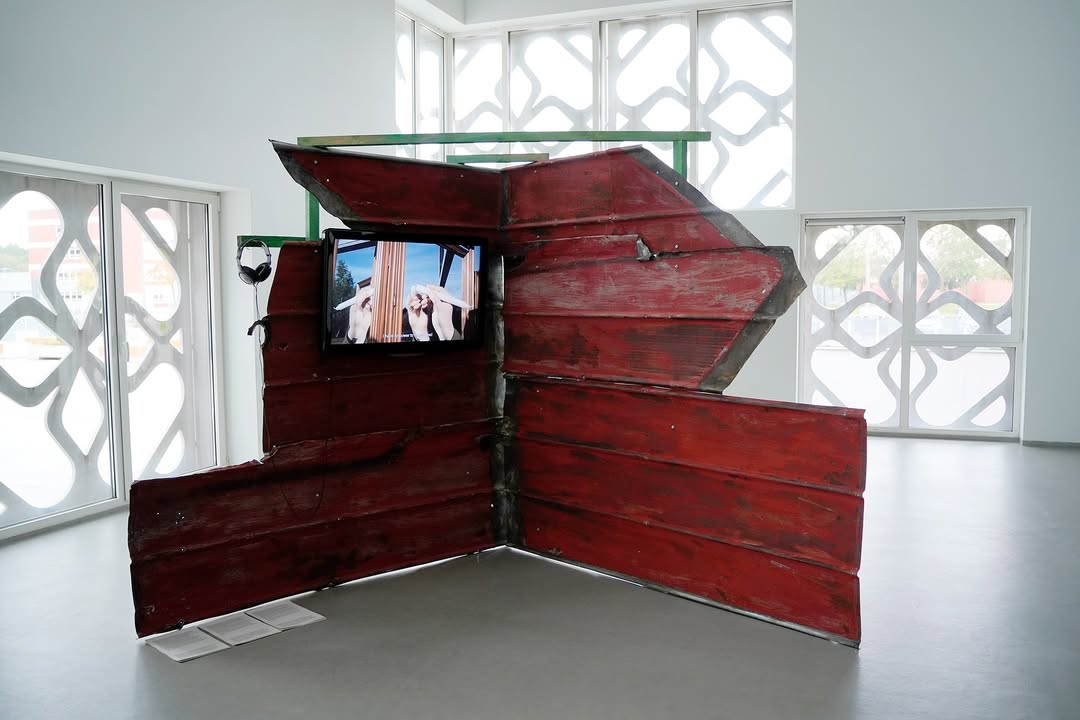
Pokuć, video screenshot, 2024 // Photo courtesy of the artist

Pokuć, 2024

multimedia installation

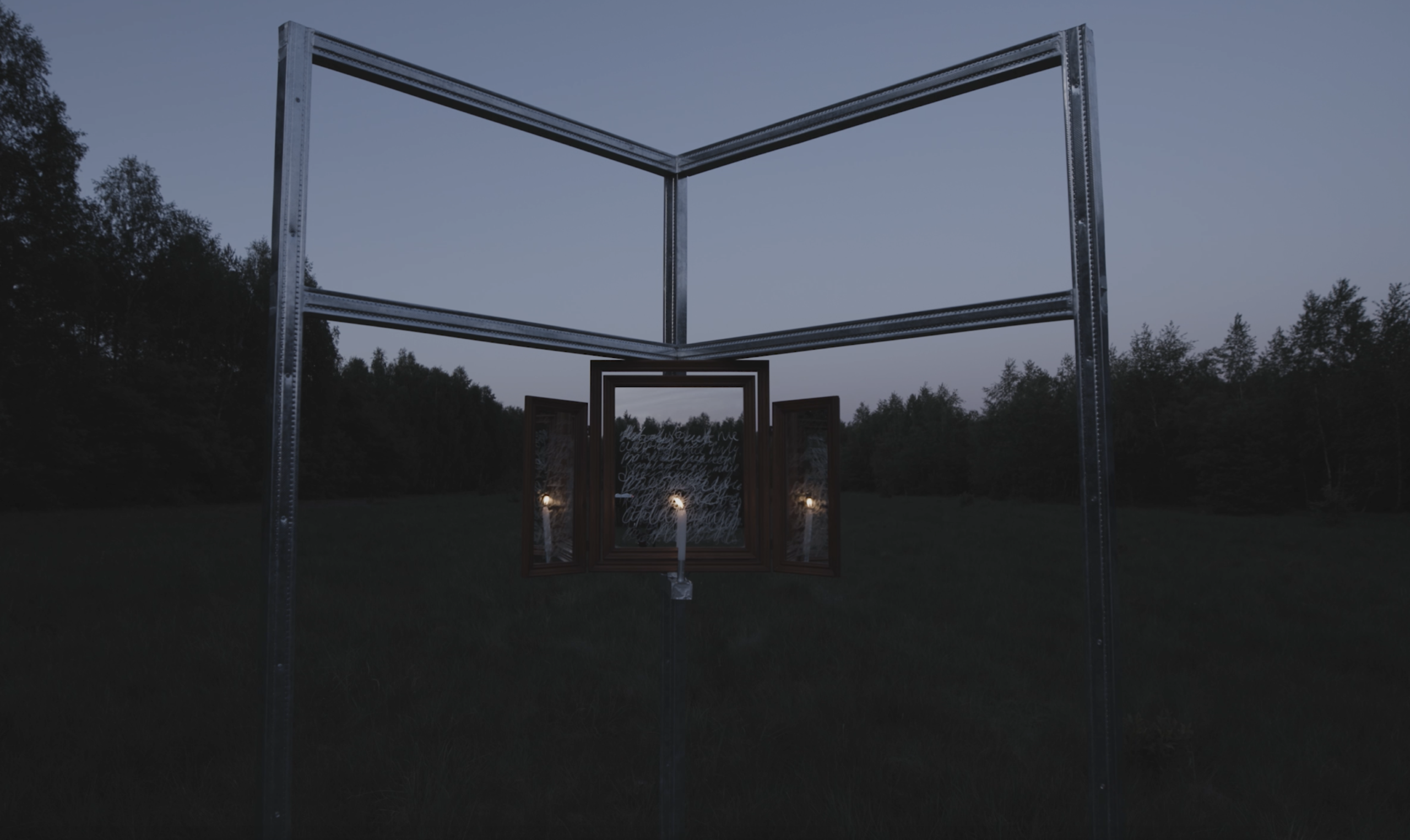
The Pokuć project explores the search for Belarusian identity in the contexts of migration, exile, and colonization. It reflects on how this condition has been reflected across classical and contemporary, elite and folk cultures. Central to the project is the “Kut” (corner), a visual-semantic symbol of layered meanings. Rodny kut (native corner) signifies the Motherland, while Pokuć is a sacred home corner. Corners also represent contradictions and borderlines: places of prayer and ritual, but also of punishment; places of safety, yet also of hopelessness and entrapment. The project brings together a series of drawings, art objects, and a video performance.

Pokuć exhibition, Marshałkowska |18, Warsaw, 2024 // Photos by Sasha Velichko

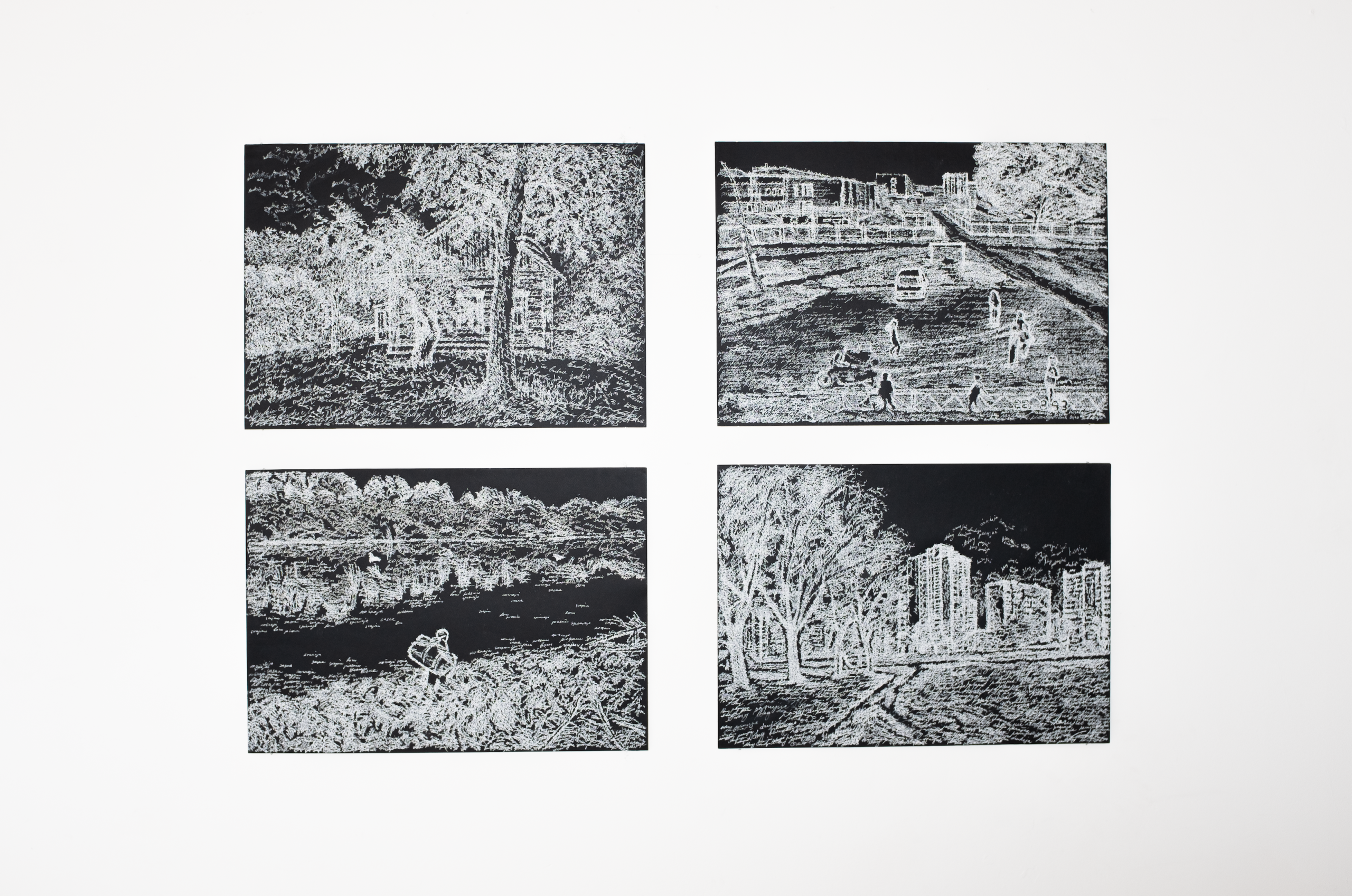
If you haven't seen the new, you're happy with the old, from the Krajaviedy series, Pokuć project, 2024 // Photo courtesy of the artist

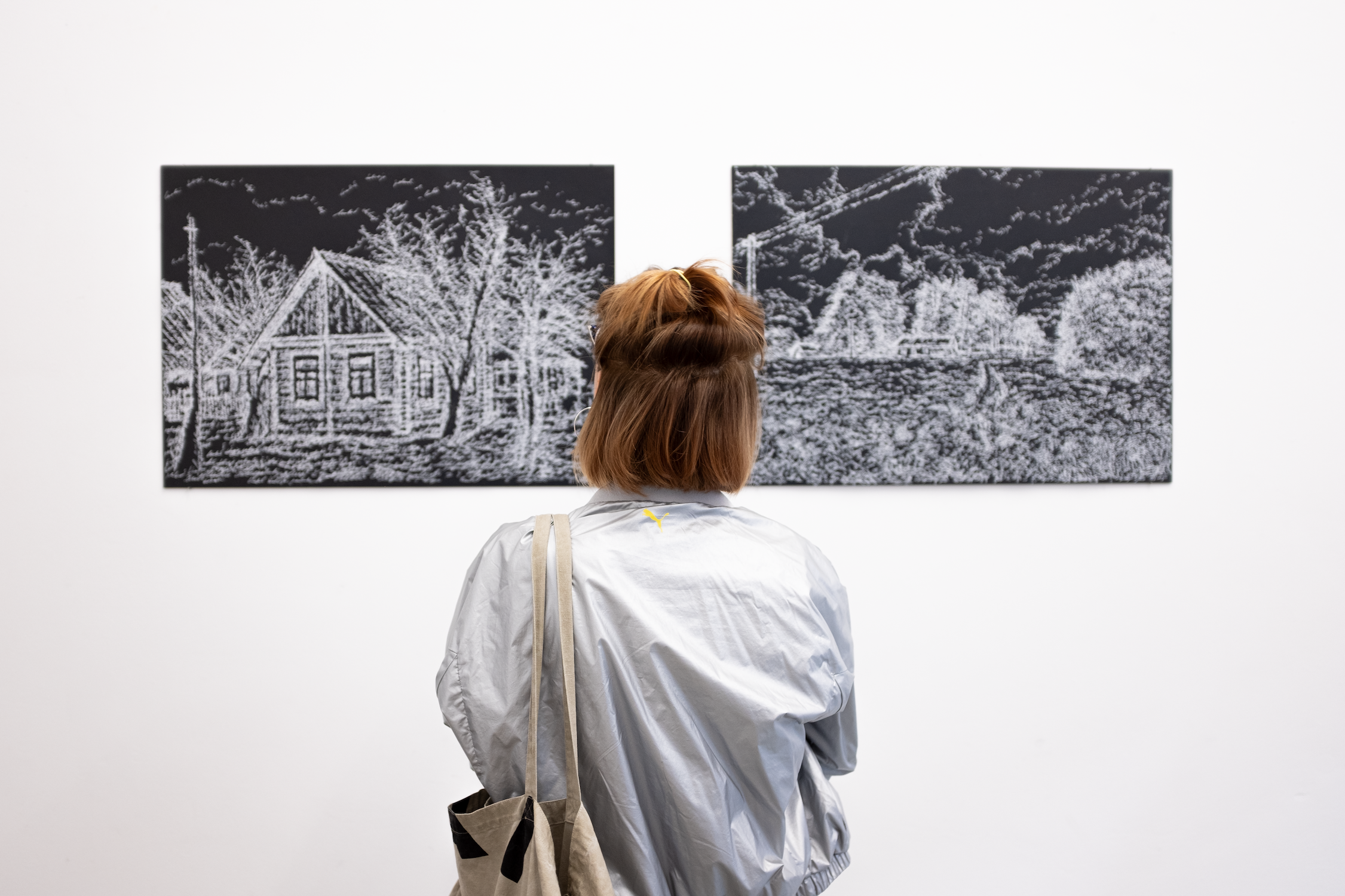
The Krajaviedy series (pen on paper, 50×70 cm) merges landscapes (krajavidy) with knowledge (viedy). These drawings aim to uncover the visual-textual code of “Belarusianness”. The artist ask exiled Belarusian cultural figures to share a photolandscapes that are visually associated with Belarusian identity and to choose a suitable proverb from the list. These calligram drawings are created from repeated proverbs that speak of fate’s injustice and the patient endurance of hardship.

Pokuć exhibition, KUT, Poznań, 2024 // Photo courtesy of the artist

Pokuć exhibition, Marshałkowska |18, Warsaw, 2024 // Photo courtesy of the artist

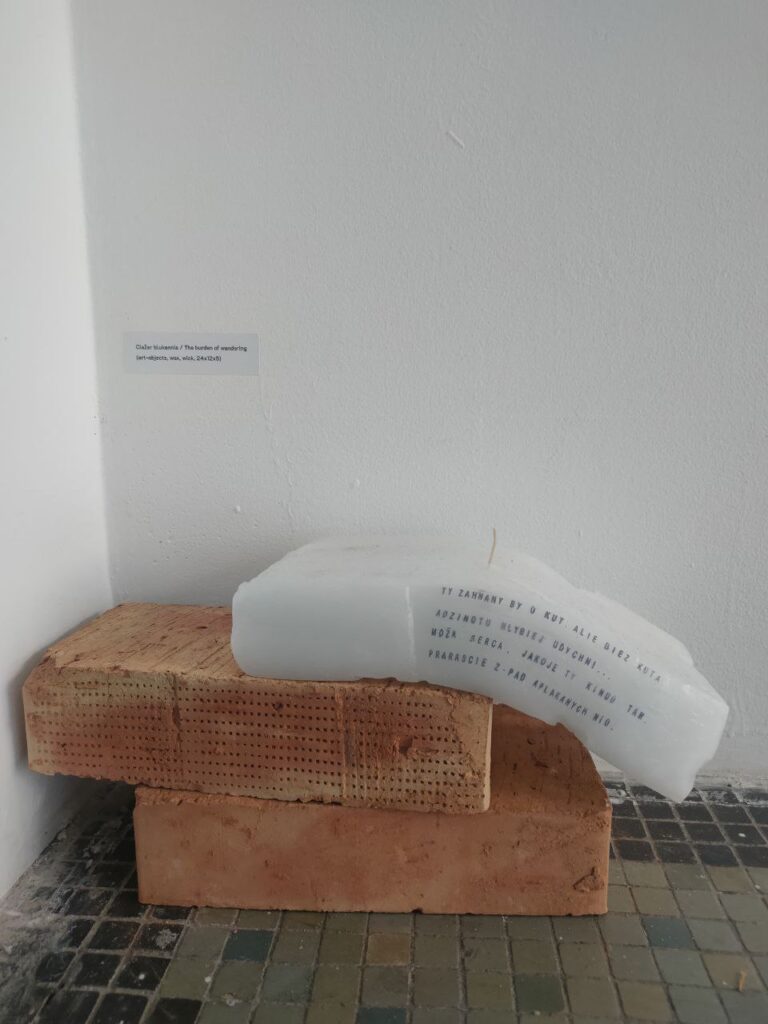
Ciažar blukannia / The Burden of Wandering (wax, wick, 6×12×25 cm) consists of fragile wax bricks inscribed with fragments of Belarusian poetry. My native nook, dear land that bred me! I have no power to forget thee! (1911-1923) – lines of the poem by national poet Jakub Kolas begun in prison and completed in separation from his homeland after the partition of Belarus. These famous words have echoed throughout the ages in the poems of Belarusian poets in exile, quoted in these objects. The wax bricks symbolize parts of the home, scattered across time and space, but also ritual candles lit in the sacred corner as prayer, hope, and the fragile light of belonging.

Pokuć exhibition, KUT, Poznań, 2024 // Photo courtesy of the artist

Pokuć exhibition, Marshałkowska |18, Warsaw, 2024 // Photo courtesy of the artist

Pokuć video, Samasiej festival, Technical University Library, Bialystok, Poland, 2025 // Photo courtesy of the artist

The eponymous video performance Pokuć (3.15 min, Video by Borys Peuchy, Hleb Burnasheu, Music & set-up by Mufer) was created on the Belarusian–Polish border, in the Podlasie region. The video captures a ritual in an ephemeral sacred corner. As a prayer or spell, the artist whispers exiled Belarusian poets’ calls to their Motherland trying to catch its reflection in the mirror. The text intertwines fragments of poems by Jakub Kolas, Hanna Sieviaryniec, Larysa Hienijuš, Andrej Chadanovič, Michaś Čarot, Nasta Kudasava, and Maryja Badziej.